
Data analysis · Homes
Vancouver still issues two multiplex permits for every new house
Small-building permits fell this year. Multiplexes held up best: 246 from January to October, against 121 new houses. But the typical permit now takes 192 days.
Share this article
In October we found that Vancouver was issuing more building permits for multiplexes than for new houses. We went back to the City’s permit data, now through October, to see whether that held.
It did, and the gap has widened. From January to October, the City issued 246 new-building permits for multiplexes, against 121 for new detached houses. That is about two for every house.
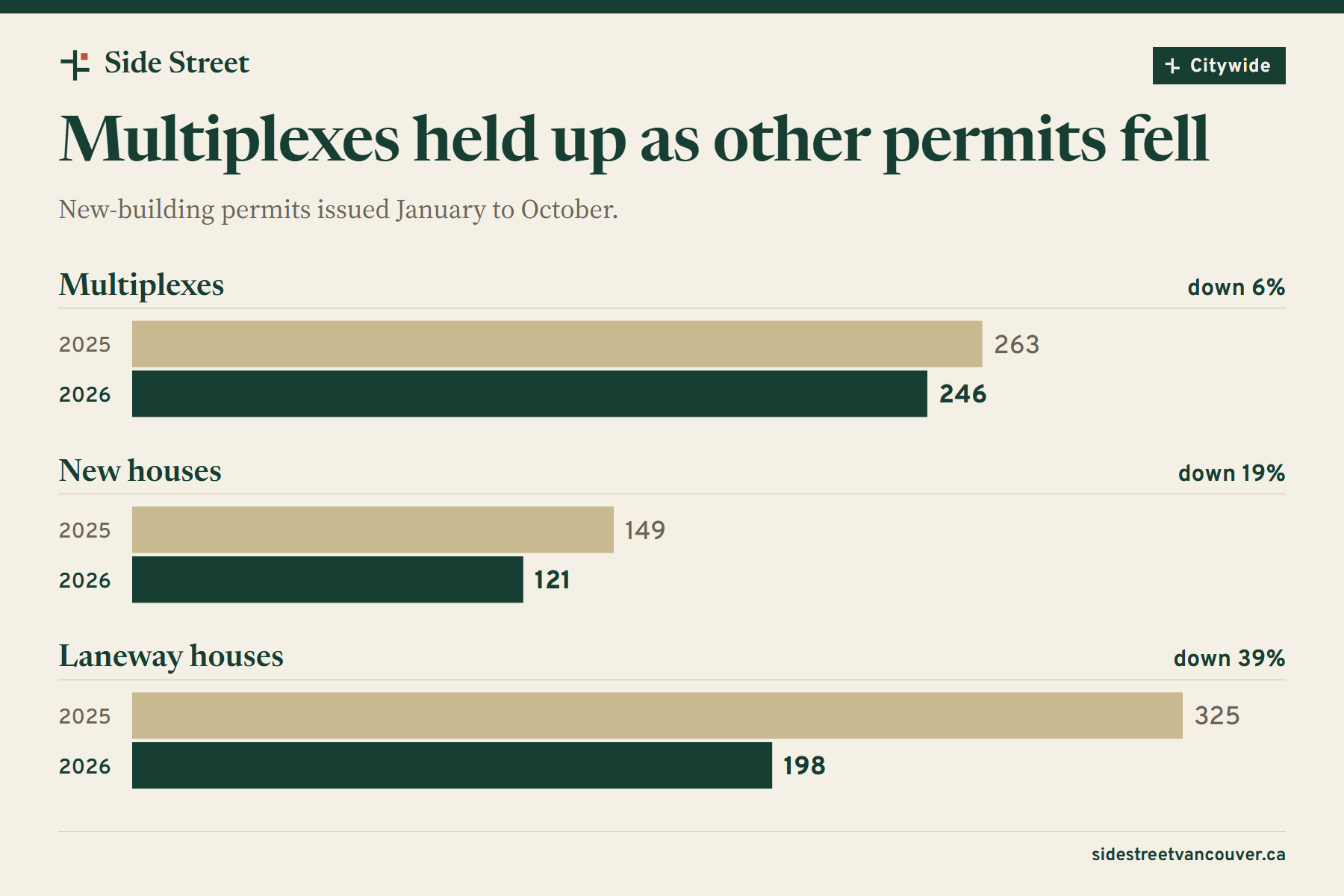
All three kinds of small residential building slowed this year. Laneway houses fell furthest, from 325 permits to 198. New houses fell 19%. Multiplexes slipped 6%, from 263 to 246.
The homes described in those permits barely moved: 597 this year against 609 in the same months of 2025.
A slow spring, then back to pace
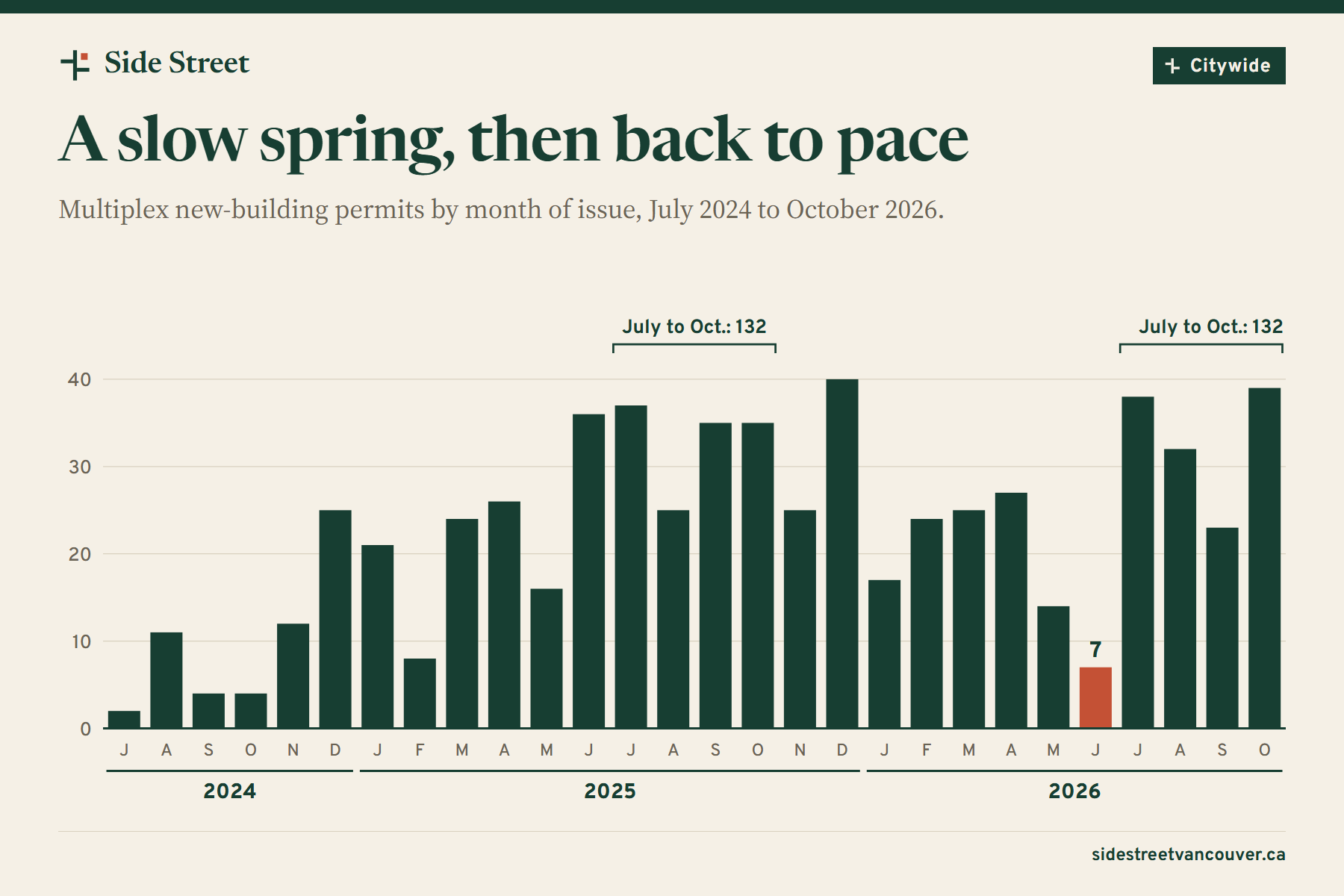
Most months land between 20 and 40 permits. This spring dipped, with only 7 in June, the fewest since 2024. From July to October the City issued 132, exactly as many as in the same four months last year.
The wait is longer
The typical multiplex permit took 192 days from application to issue this year, up from 167 in the same months of 2025. The first half of 2026 was the slowest, at a median of 206 days. It has improved since, to 187.
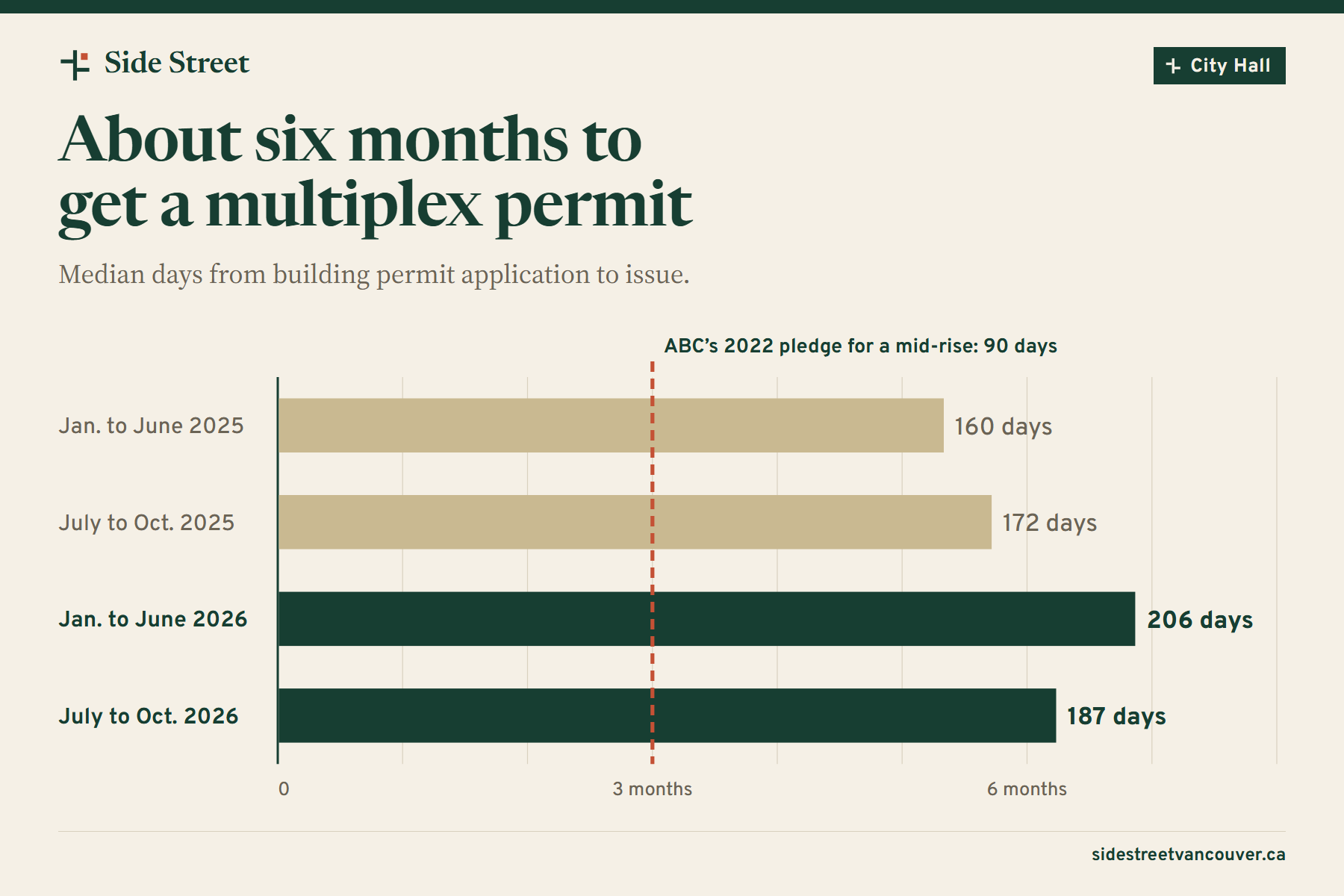
Of the multiplex permits issued this year, 24 took more than a year. ABC’s 2022 “3x3x3x1” pledge set no target for multiplexes. It promised three months for a whole mid-rise building. Most multiplexes, at three storeys and a handful of homes, are taking about six.
Where they are going
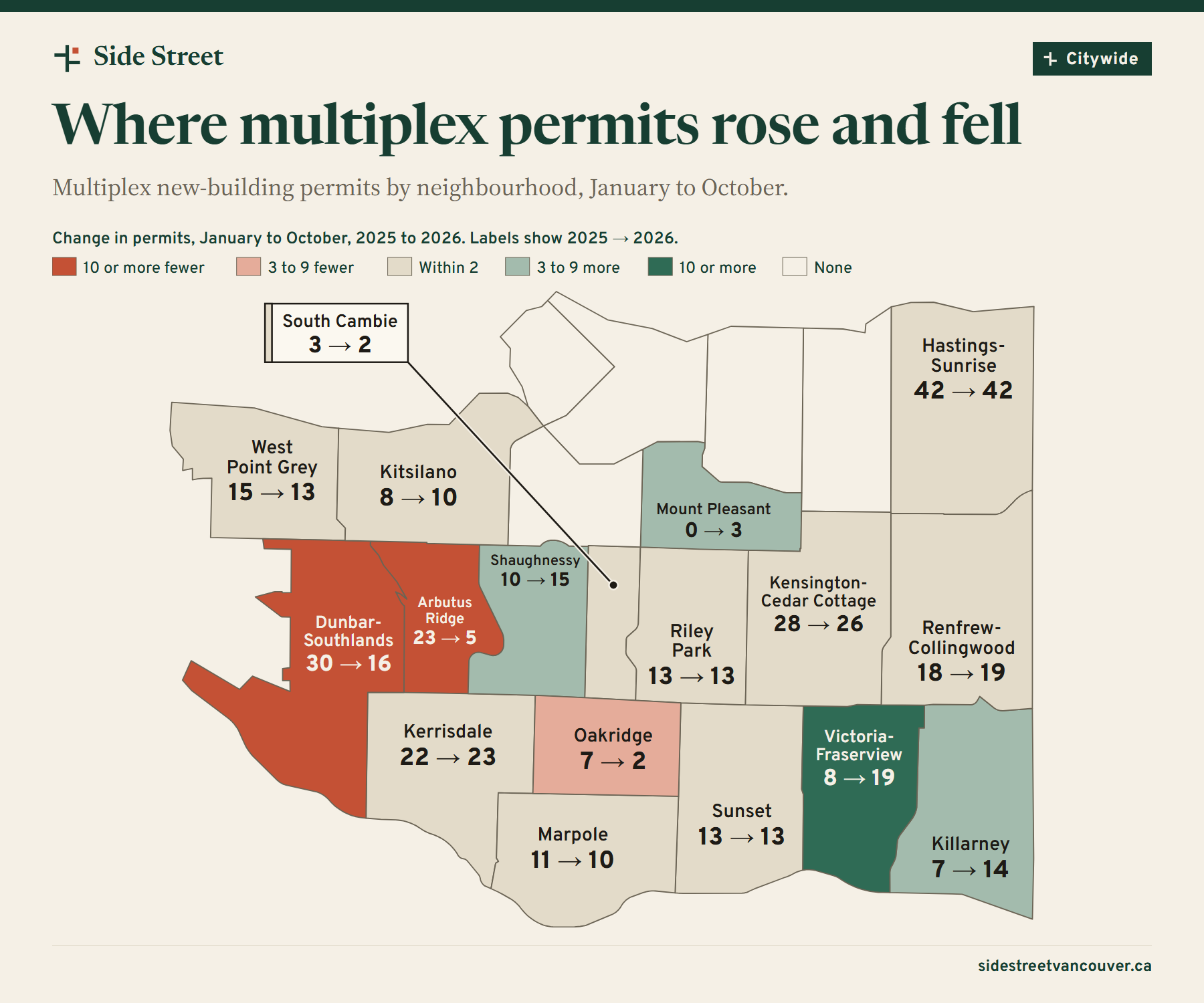
Hastings-Sunrise still leads, with 42 permits for the second year running. Victoria-Fraserview more than doubled, from 8 to 19, and Killarney doubled, from 7 to 14. The west side fell off: Dunbar-Southlands dropped from 30 to 16, and Arbutus Ridge from 23 to 5.
| Area | 2025 | 2026 |
|---|---|---|
| Hastings-Sunrise | 42 | 42 |
| Kensington-Cedar Cottage | 28 | 26 |
| Kerrisdale | 22 | 23 |
| Renfrew-Collingwood | 18 | 19 |
| Victoria-Fraserview | 8 | 19 |
| Dunbar-Southlands | 30 | 16 |
| Shaughnessy | 10 | 15 |
| Killarney | 7 | 14 |
| West Point Grey | 15 | 13 |
| Riley Park | 13 | 13 |
| Sunset | 13 | 13 |
| Marpole | 11 | 10 |
| Kitsilano | 8 | 10 |
| Arbutus Ridge | 23 | 5 |
Our multiplex map shows each permit through September against the lots where multiplexes are allowed.
What we think
The multiplex rules are doing what they were meant to. In a year when fewer people are building small homes at all, they have become the main way new homes go onto Vancouver’s house lots. Several homes where one house stood are a better use of a street that already has a bus, a school and a corner store.
About 60 homes a month is still a modest number for a city this size. The quickest help the new Council can give is the wait. Six months for a permit on a building the zoning already allows is too long. Council should ask staff why the spring stalled and set a target for multiplexes: three months, the same ABC promised for a mid-rise, would be a fair start.
The fall on the west side deserves a look as well. Those are some of the city’s best-served and most expensive streets, and they should be taking their share.
How we counted: new-building permits whose description mentions a multiplex, as in our October story. Front and rear buildings on one lot get separate permits. Unit counts come from the permit descriptions. Data downloaded November 8, 2026.
Vancouver election guide · Try the Vancouver election compass · Standards and corrections
