
Analysis · Shops
Why Vancouver’s corner cafés run into a 16-seat rule
A 2025 Nomad Coffee permit applies the 16-seat neighbourhood-grocery-store limit to its café expansion. We matched 19 food-shop and café licences to about 76,000 house-zoned lots; this is not an exhaustive census.
On a Saturday lunchtime in September, the patio at Le Marché St. George was busy. It sits on the corner of St. George Street and East 28th Avenue in Riley Park, in a shingled building from 1910, with houses on every side.
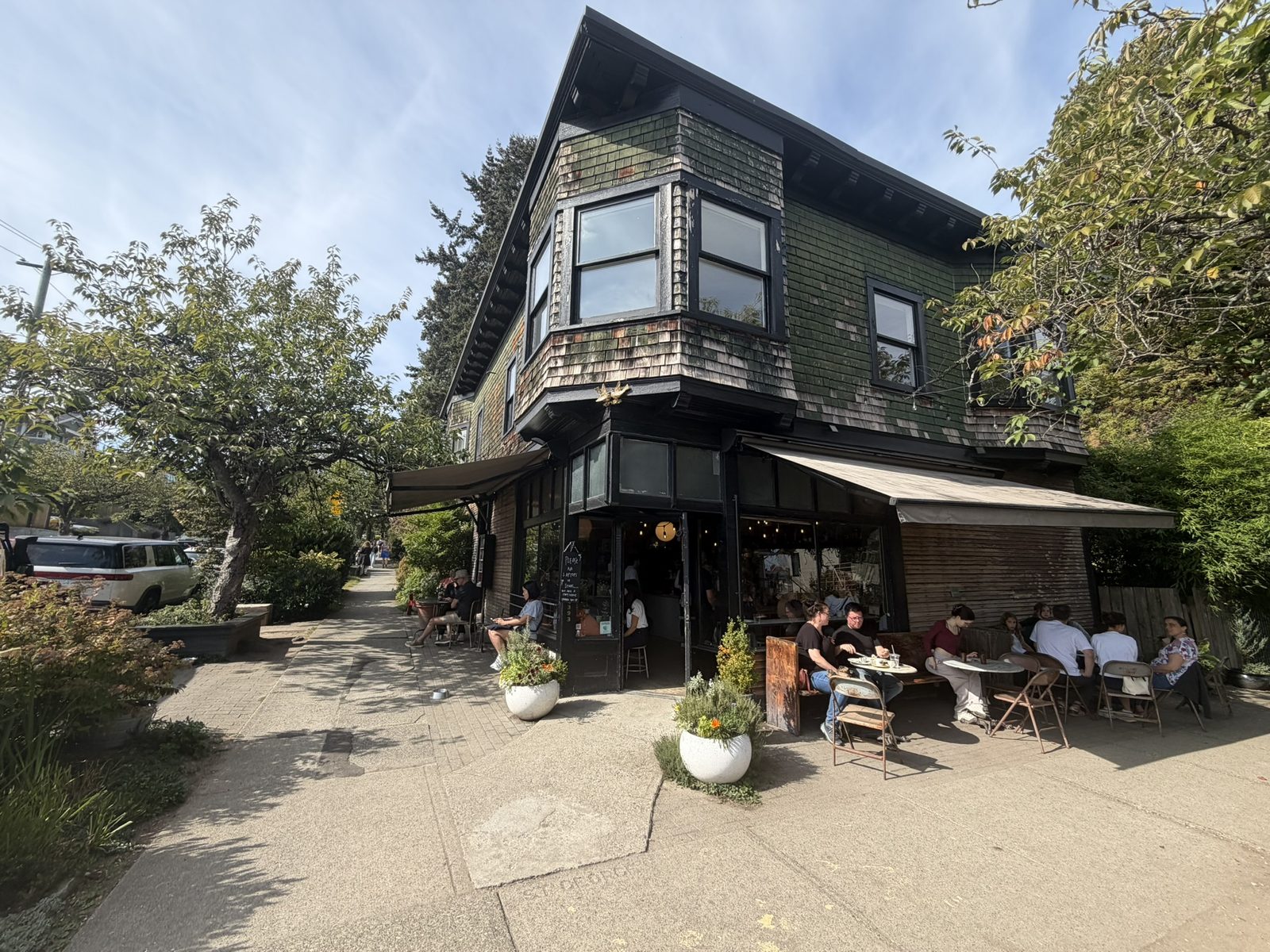
The lot is zoned R1-1, the City's zone for houses and small multiplexes. So how is there a shop on it? Through a short section of the zoning bylaw that shapes a lot of the city's favourite corner spots, and it comes with a number: 16.
The rule
One use allowed in residential districts is the neighbourhood grocery store. The bylaw defines it as a business whose primary purpose is selling groceries and convenience goods; it may also serve prepared food and drinks up to 1% alcohol by volume. Section 11.8.2 sets the limits:
- no more than 110 square metres, about 1,180 square feet, for the shop and its storage;
- no more than 16 seats, indoors and outdoors combined;
- no more than 15.3 metres of frontage;
- no live entertainment.
The City decides each one case by case, after notifying the neighbours and looking at garbage, deliveries and the houses next door.
Sixteen isn't a random number. The bylaw defines a Class 1 restaurant as a place with at least 17 seats. The grocery-store limit is 16, indoors and outdoors combined.
A café permit under the grocery-store category
Nomad Coffee's current business licence calls it a café. Its 2025 building permit for the expansion on Yew Street used the neighbourhood-grocery-store category and capped it at 16 seats. The two records use different categories.
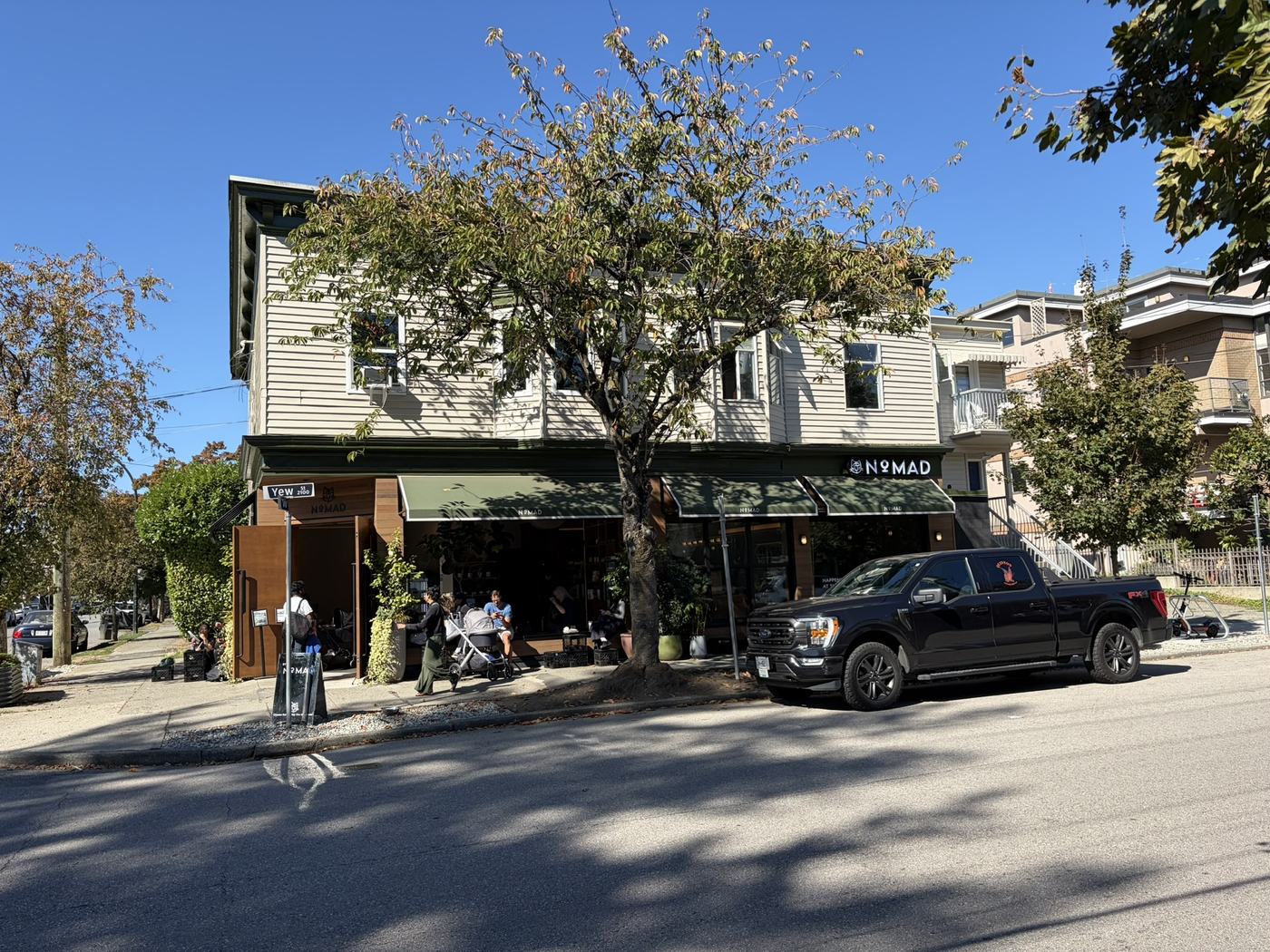
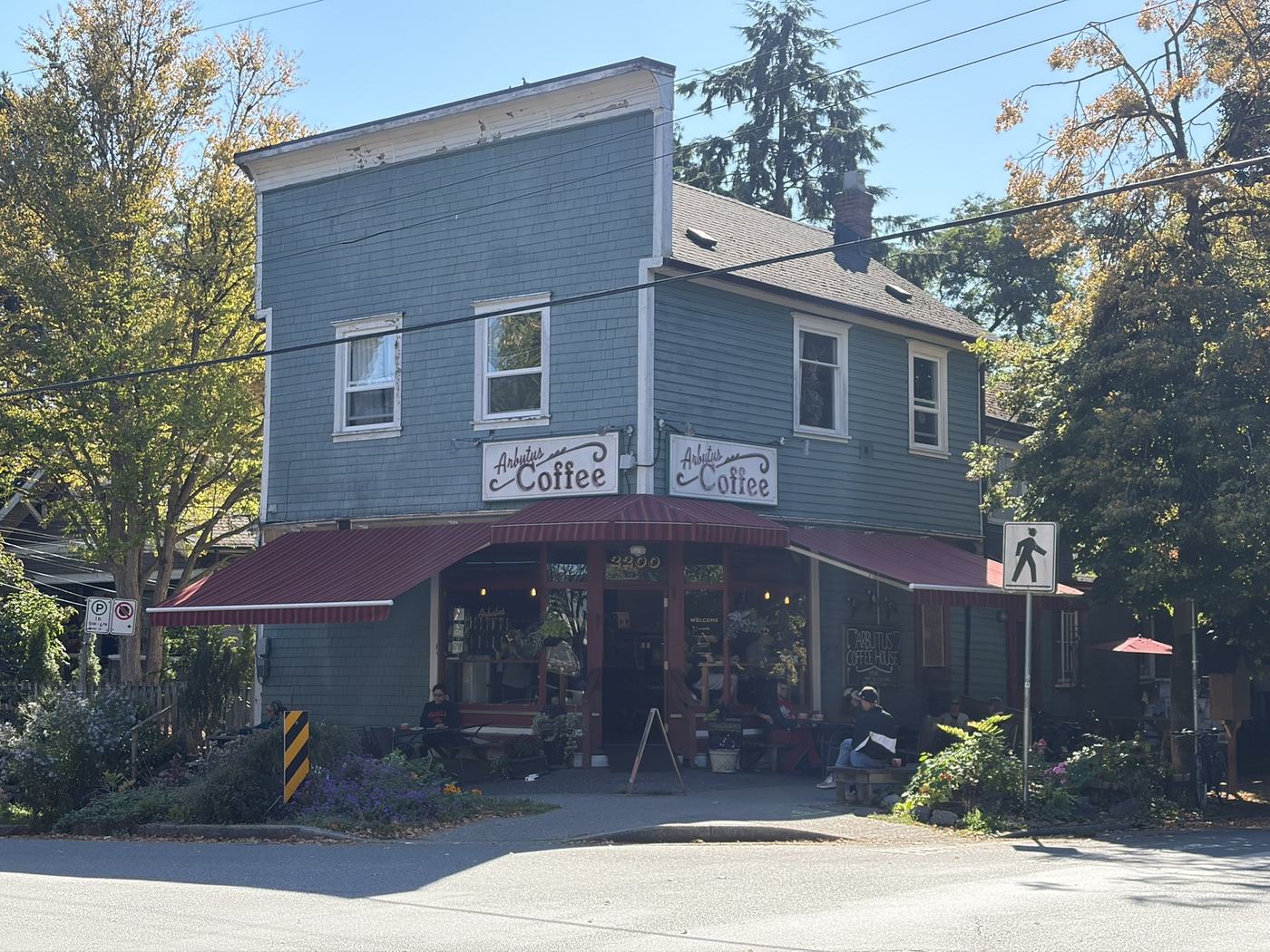
The permit described a neighbourhood grocery store and allowed "a maximum of sixteen (16) seats." It also required a sign stating the limit. The Mighty Oak on West 18th Avenue in Riley Park and Wilder Snail in Strathcona are licensed as cafés on house-zoned lots.
How rare they are
I matched 2026 City food-shop and café licence records to house-zoned lots. The address-and-lot match produced 19 apparent matches among about 76,000 lots zoned for houses and small multiplexes. This is a licence-based estimate, not an exhaustive census of open shops: address points can fall off their lot, and licence categories and records may miss businesses.
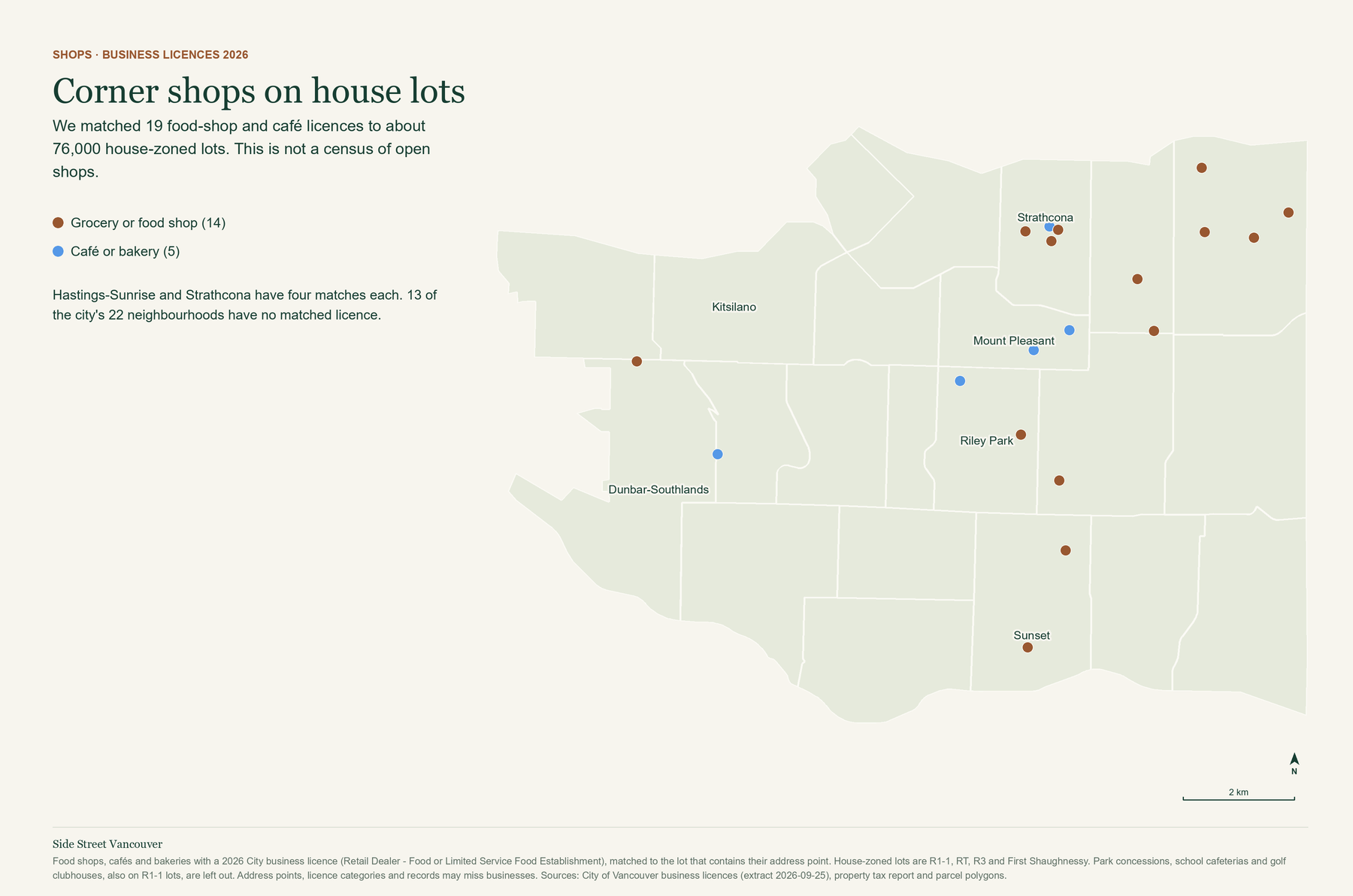
Hastings-Sunrise and Strathcona have four each. 13 of the city's 22 neighbourhoods have no matched licence, including most of the west side and the south. Parks, schools and golf courses are excluded even when zoned for houses.
Thirty years of grocers on one corner
Le Marché St. George shows what one of these corners can be. The City's licence records for 4393 St. George Street go back to 1997, and a food retailer has held a licence there in every year on record but 2009. From 1997 to 2008 it was St. George Grocery, and the licence changed hands almost every year. Le Marché took over in 2010 with two employees. By 2016 it had 19. Its current licence lists eight.
The building is assessed at $73,100 and the land under it at $2,152,000, according to the 2026 property roll. On paper, almost all of that corner's value is in the land, which is worth keeping in mind whenever a corner like this comes up for sale.
Is the rule out of date?
Parts of it have already changed. In 2021, Council removed restrictions that had made it hard for a new business to open as a neighbourhood grocery store, according to a City memo. So new corner stores are allowed, not just old ones carried over.
In 2023 the City went further and asked residents whether more kinds of small shops and services should be allowed on residential streets, and where. It said rule changes were expected in 2024. The 2026 bylaw still has the same 16 seats and 110 square metres, and I couldn't find a council decision that came out of that work.
The bigger version of the idea, the Villages Plan, would have required shops at street level around 17 local centres. Council rejected it 10 to 1 in July.
What I think
I'd like to see a lot more of these, and I think the rules should make it easier.
Most of Vancouver's shops are on arterials: Broadway, Main, Kingsway, Dunbar. Those are the loud, busy streets you'd rather not linger on, and the ones where crossing with a stroller or a dog takes some nerve. A corner store on a side street means you can walk two blocks for milk or a coffee without going near traffic, and run into your neighbours while you're at it. On a lot of streets that's the difference between walking and driving.
So here's what I'd change. Allow a small café as its own use on residential lots. Allow a few more seats, especially outdoors in summer. Let a corner café pour a glass of beer or wine. And keep the parts that protect neighbours: limits on hours, noise, garbage and deliveries, and a size that keeps these places small. Small is the point.
The worries are fair ones. People who live next to a busy corner deal with delivery trucks, early-morning bins and customers' cars. Those are problems to solve with conditions on a permit, not reasons to keep a whole neighbourhood from having anywhere to walk to.
Where the parties stand
OneCity has the most specific plan. In August it promised to allow corner stores, cafés, bakeries and other small shops in residential areas, starting near schools, parks, transit and seniors' housing, with rules on noise, waste and hours. It says zoning changes would follow within two years. Its councillor, Lucy Maloney, was the only vote for the Villages Plan.
The Greens have promised cheaper, faster permits for small businesses, including fast-tracked changes of use, but not specifically shops on residential streets. ABC's platform promises faster permitting at City Hall generally. I didn't find a corner-store commitment in it, and ABC's councillors voted against the Villages Plan. I haven't found a position from the other parties. If I've missed one, tell me and I'll add it.
If you're running for Council, here's the question: would you change the 16-seat rule, and in which direction?
How I did this
Zoning rules are from the City's Zoning and Development By-law: Section 11.8.2 (February 2026 edition), the Section 2 definitions and the R1-1 district schedule (June 2026 editions). The count of shops and cafés on house lots uses the City's open business licence data for 2026 (Retail Dealer - Food and Limited Service Food Establishment licences), matched to the lot that contains each address point using the City's parcel map, with zoning from the 2026 property tax roll. House-zoned lots are R1-1, RT, R3 and First Shaughnessy. Licence history for 4393 St. George is from the City's licence data for 1997 to 2012, 2013 to 2024 and the current year. Nomad's permit is from the City's issued building permits data. Party positions are from OneCity (August 12), Daily Hive on the Greens (September 21) and ABC (September 21). Photos were taken on September 16 and 19. I haven't yet spoken with the owners of Le Marché St. George, Nomad or Arbutus Coffee; this piece is from public records.
Vancouver election guide · Try the Vancouver election compass · Standards and corrections