
Analysis · Homes
Vancouver now issues more permits for multiplexes than for new houses
592 multiplex permits since June 2024, with Hastings-Sunrise out front and the west side close behind. Here’s where they are, why they’re getting slower, and why I think they’re worth it.
Three years ago, most residential lots in Vancouver were zoned for a house, maybe with a suite and a laneway home out back. Since October 17, 2023, most of them can hold a multiplex instead: a building, or a pair of them, with up to six homes.
I wanted to know whether the new rules were turning into building permits, so I went through the City's data myself. They are. A permit authorizes construction; it does not tell us whether a home is finished or occupied.
More multiplex permits than new houses
The first multiplex building permit was issued on June 4, 2024. By September 22 this year there were 592. In 2025 the City issued 328 multiplex permits and 171 for new single-family houses. This year it's 204 to 111, and multiplexes are ahead of duplexes and laneway homes too.
| Year | Single-family house | Duplex | Laneway house | Multiplex |
|---|---|---|---|---|
| 2022 | 445 | 374 | 438 | 0 |
| 2023 | 284 | 307 | 296 | 0 |
| 2024 | 220 | 269 | 399 | 60 |
| 2025 | 171 | 226 | 365 | 328 |
| 2026 (to Sept. 22) | 111 | 121 | 177 | 204 |
A permit isn't a finished building, and some of these will stall or change. But it's the point where someone has paid for drawings and fees and is ready to dig, so it's a decent early look at what's coming.
Where they're going
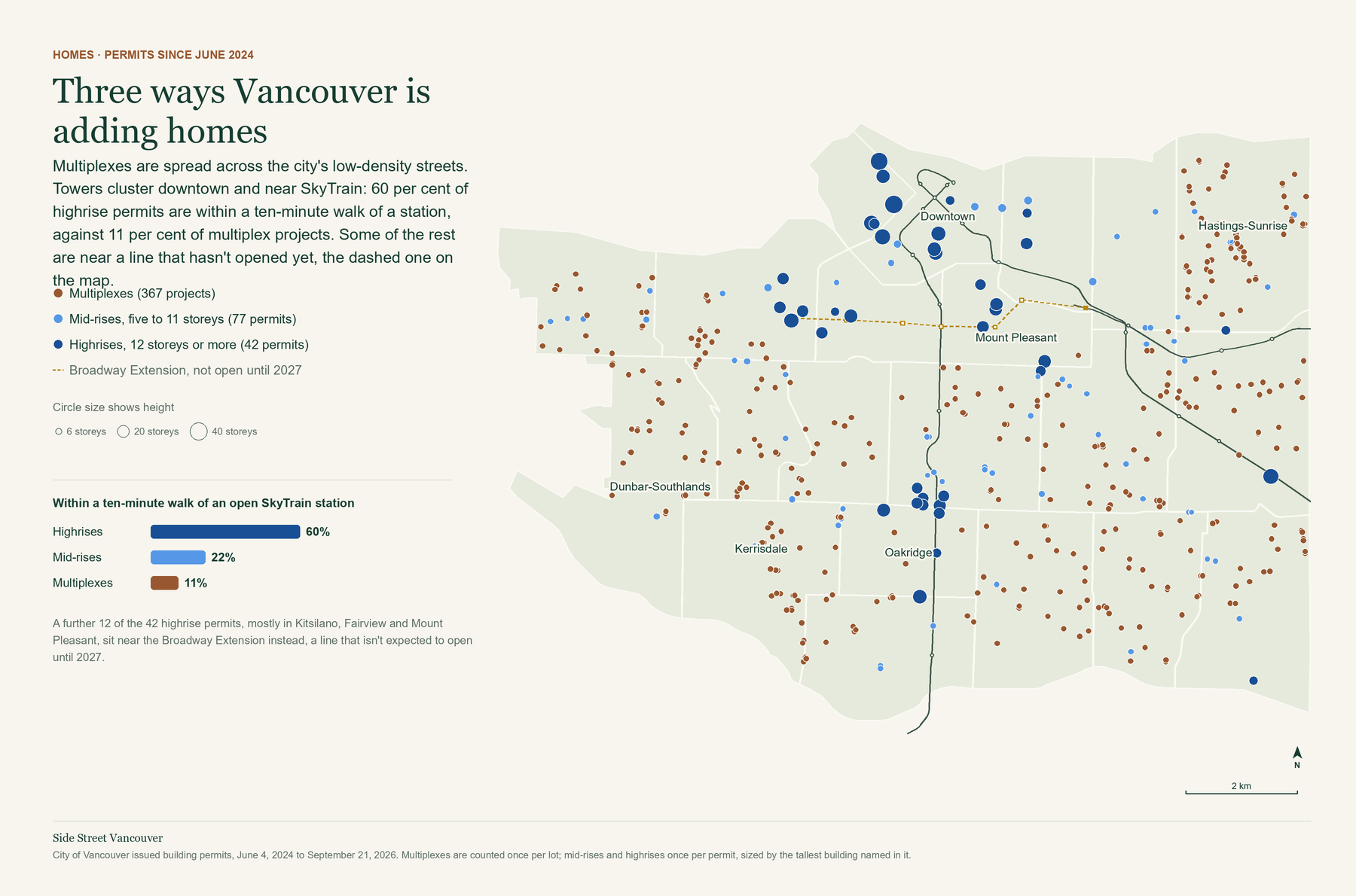
Hastings-Sunrise leads with 97 permits. A lot of the rest are on the west side: Kerrisdale, Dunbar-Southlands, Arbutus Ridge, Shaughnessy and West Point Grey together have 207. Those neighbourhoods have bigger lots, and a bigger lot is allowed more homes, which is probably part of it. I'd like to hear from builders about why the numbers work where they do.
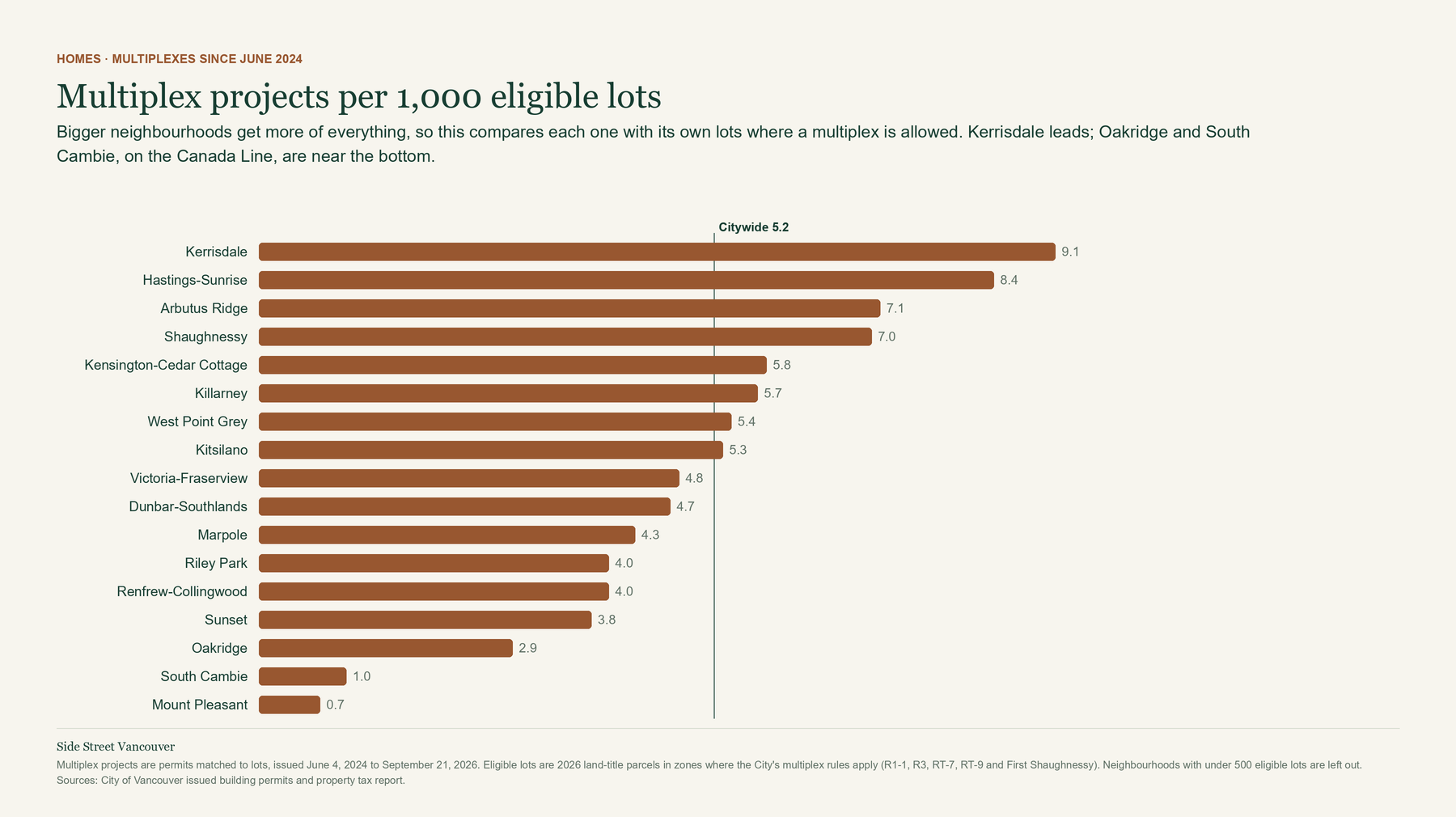
Big neighbourhoods get more of everything, though, so I also matched every permit to its lot and compared each neighbourhood with the number of lots where a multiplex is allowed. By that measure Kerrisdale leads with 9.1 projects per 1,000 lots, then Hastings-Sunrise (8.4), Arbutus Ridge (7.1) and Shaughnessy (7.0). The citywide rate is 5.2. Oakridge (2.9) and South Cambie (1.0) are near the bottom, even with the Canada Line running through both. Mount Pleasant has one multiplex permit, but almost all of its eligible lots are zoned R3, which also allows small apartment buildings.
Raw permit counts by neighbourhood
| Neighbourhood | Permits |
|---|---|
| Hastings-Sunrise | 97 |
| Kensington-Cedar Cottage | 59 |
| Kerrisdale | 53 |
| Dunbar-Southlands | 46 |
| Arbutus Ridge | 43 |
| Renfrew-Collingwood | 41 |
| Shaughnessy | 37 |
| Victoria-Fraserview | 36 |
| Sunset | 35 |
| Riley Park | 30 |
| West Point Grey | 28 |
| Killarney | 27 |
| Kitsilano | 22 |
| Marpole | 19 |
| Oakridge | 9 |
| South Cambie | 3 |
| Mount Pleasant | 1 |
One project can need more than one permit, for example a front and a rear building. 6 permits have no neighbourhood recorded.
Getting slower as they get popular
The median multiplex permit took 108.5 days in 2024, 168.5 days in 2025 and 188 days so far this year. That's the time from permit number to issued permit, and it has grown as applications stacked up, while houses and renovations have been getting faster. If the next council wants more of these, the permit queue is the obvious place to start.
Why I think this matters
This is the part where I stop counting and say what I think.
For decades, Vancouver has mostly built two kinds of home: the detached house and the tower. Uytae Lee's video The Missing Middle Mystery, made with Urbanarium in 2020, is still the best short explanation of how that happened. He calls it "Super Size or Happy Meal", and walks through the parking rules, setbacks and rezoning fights that made everything in between so hard to build.
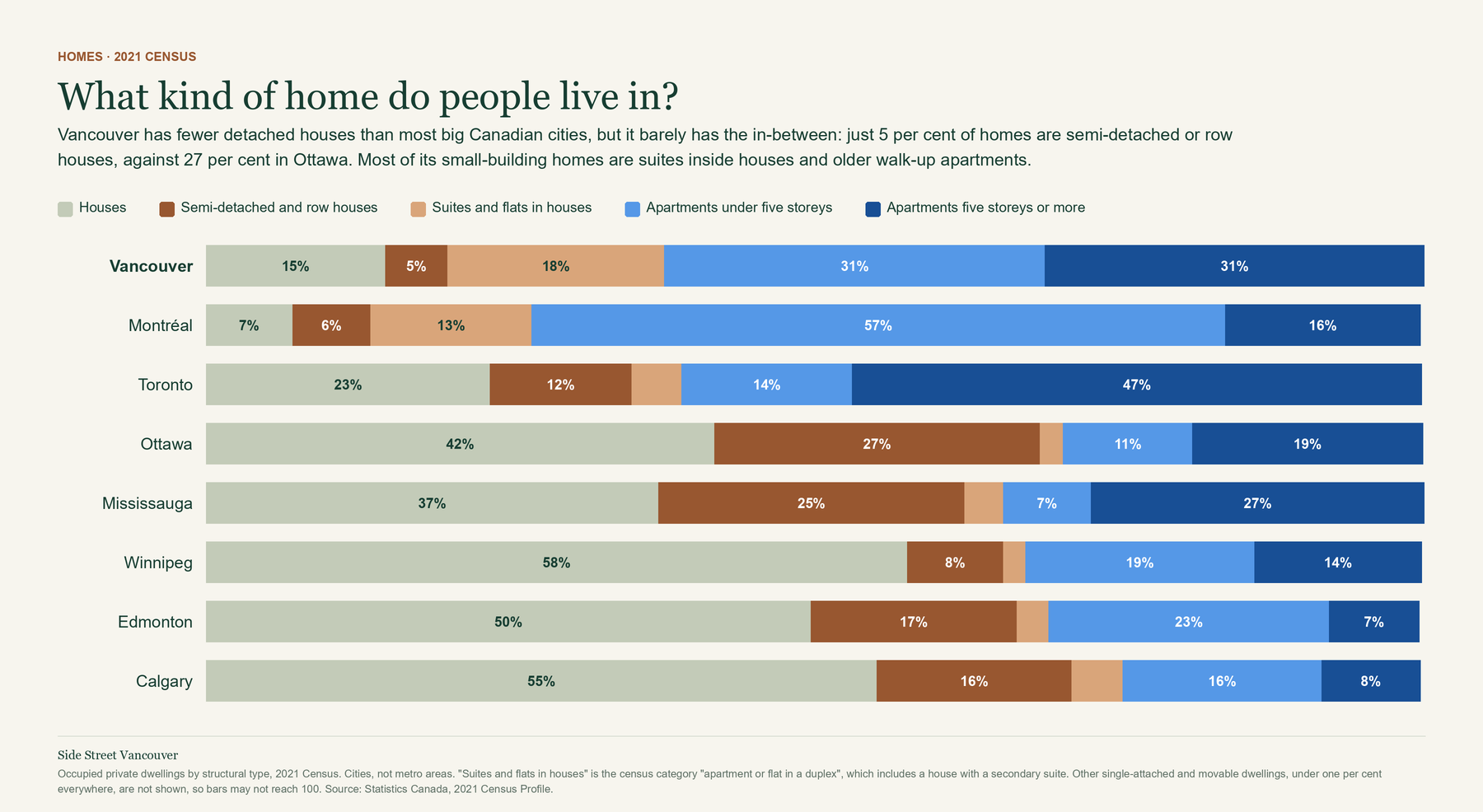
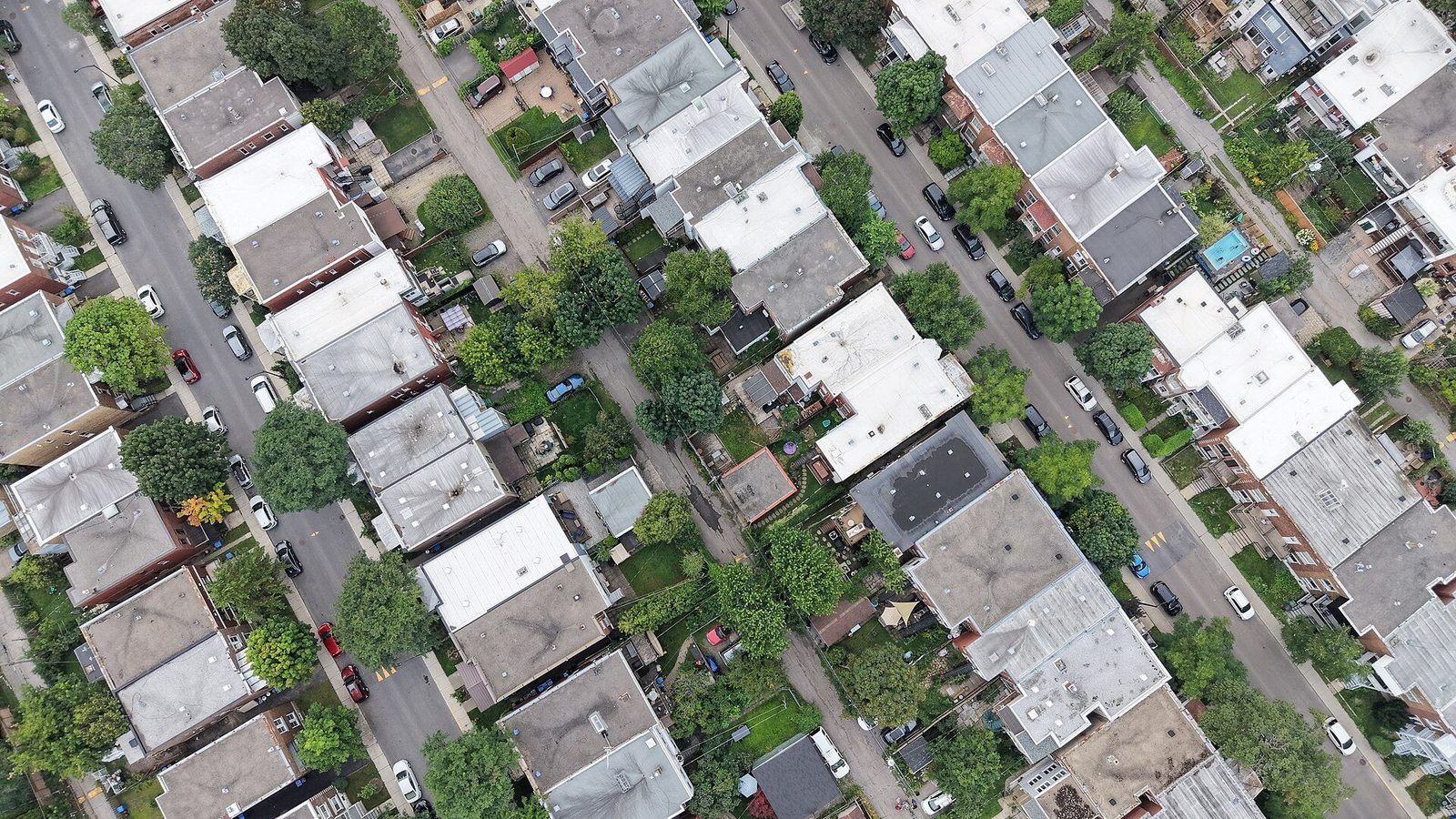
The census shows how lopsided the result is. Only 15 per cent of Vancouver homes are counted as detached houses, fewer than in most big Canadian cities, because so many houses have a suite that the census counts separately. But just 5 per cent are semi-detached or row houses. In Ottawa it's 27 per cent. Montréal, where 57 per cent of homes are in low buildings, many of them the plexes with outdoor staircases, is what a city built on the middle looks like.

I think multiplexes are one of the most useful things City Hall has done for housing in years, for three reasons.
They add homes where people already want to live, on streets with schools, parks and bus routes that already exist. A lot that held one family can hold four or six.
They add more of what's in short supply: family-sized homes that aren't a detached house or a one-bedroom in a tower. More homes and more competition won't make a new multiplex unit cheap, but they take pressure off everything else. When Auckland allowed more homes on about three-quarters of its residential land in 2016, a University of Auckland study estimated that three-bedroom rents six years later were 22 to 35 per cent lower than they would otherwise have been.
And they make a neighbourhood work better. More neighbours on a block is what keeps a corner store, a café or a bus route going. That's the link to the 16-seat rule for corner stores, which we'll look at on October 6: you can't have a walkable neighbourhood without enough people to walk.
None of that excuses a bad building. A multiplex can still cut down a big tree, leave no room for bikes or bins, or turn a blank wall to the sidewalk. Six new homes can mean a year of noise for the neighbours. Those are fair complaints, and design rules should deal with them.
What it means on October 17
The multiplex rules came from this council, in 2023. The next step was the Villages Plan, which would have allowed shops and mostly four- to six-storey buildings around 17 local centres. Council rejected it 10 to 1 in July, after more than 300 speakers, most of them opposed. Only OneCity's Lucy Maloney voted yes.
So the question for anyone running for Council is simple: are multiplexes as far as you'd go, or the start? And what would you do about a permit queue that now takes about six months?
What I don't know yet
I haven't added up homes. Permit descriptions state unit counts inconsistently, and some describe a whole project in each of its permits, so a total would double count. I also can't tell from this data how many are finished and lived in. If you live in one, or next to one, I'd like to hear how it's going.
How I did this
Source: City of Vancouver open data, issued building permits, downloaded September 23, 2026. Multiplexes are new-building permits whose description says multiplex. Houses, duplexes and laneway homes use the City's own use categories. Neighbourhoods are the City's local areas. Per-lot rates match each permit to its lot and count eligible lots in the zones where the City's multiplex rules apply, from the 2026 property tax roll. Days are the City's permit elapsed days field. Home types are from Statistics Canada's 2021 Census Profile, for the cities themselves, not their metro areas. Zoning dates are from the City's multiplex project page. The Villages vote is from Daily Hive and CBC, July 28, 2026. Auckland figures are from Ryan Greenaway-McGrevy's 2023 working paper as summarised by UHERO.
Vancouver election guide · Try the Vancouver election compass · Standards and corrections